Turning waste into value: 25 years of innovation at Twence
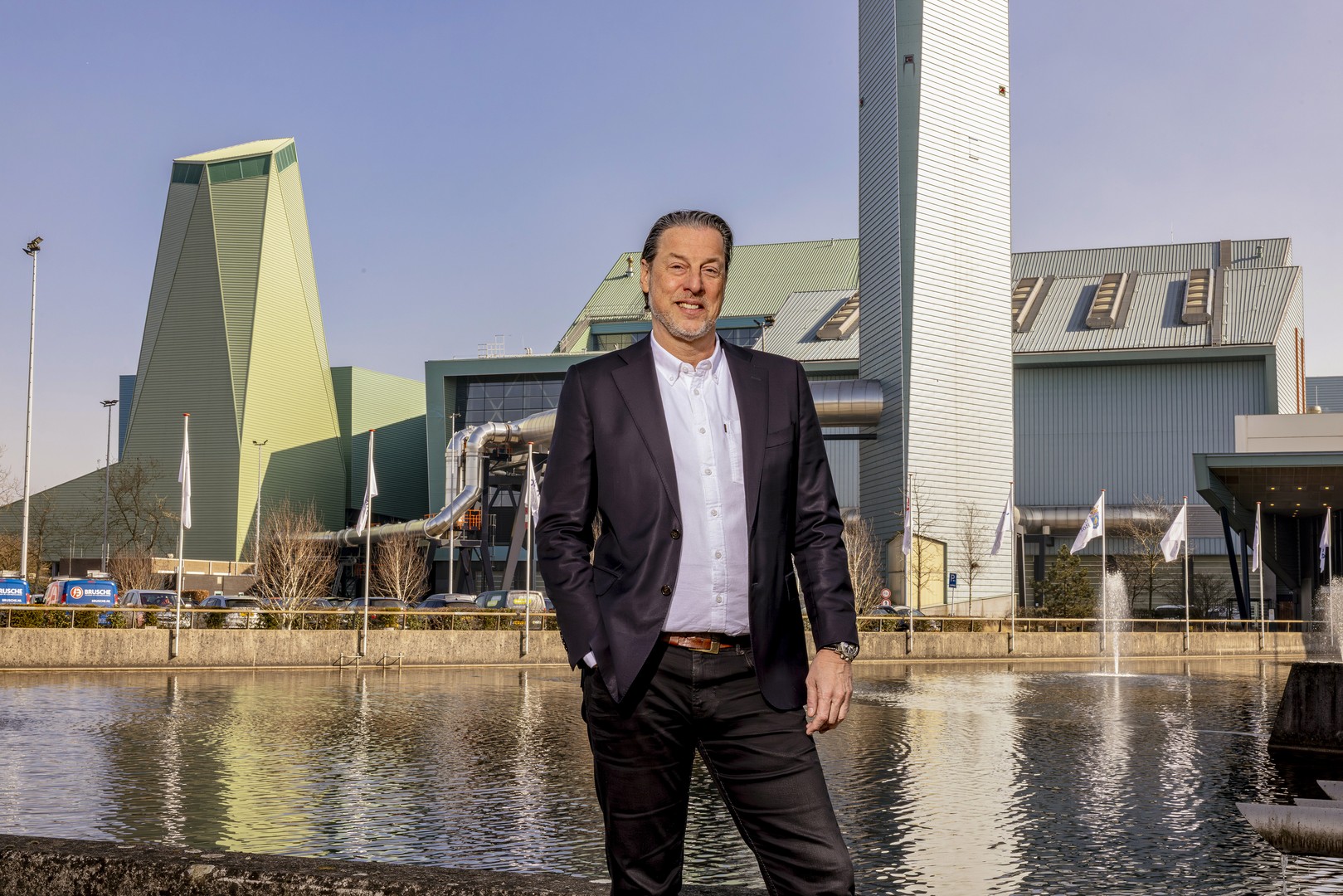
For generations, Twente has been the birthplace of innovative solutions to societal challenges. Twence demonstrates how a Twente-based company reinvented itself, transforming from a waste processor into a circular economy leader. It is a world of difference from the early years, when waste was simply sent to landfill. Managing Director Marc Kapteijn: “Our colleagues feel they are contributing to the raw materials and energy transition."
Date of Publication: 04 August 2026
Read time +/- 7.3 minutes
Twence’s 25-year history reflects the development of the entire sector. In the 1980s and 1990s, everything revolved around landfill. Waste simply disappeared into the ground. “If we still send half a per cent to landfill today, that’s a lot,” says Marc Kapteijn. Instead, waste streams are now utilised in their entirety. Through a combination of facilities and techniques, residual waste streams are converted into energy and reusable raw materials. “Ultimately, you want everything that comes in to be given new value somewhere else. That is the essence of 100 per cent circularity.”
Twente innovation gives waste new value
This transformation began in the late 1990s with a significant milestone: the construction of the first waste-to-energy plant in 1997. This marked the start of Twence’s move from simply processing waste to also producing energy and raw materials from it. Numerous innovations followed in the years that followed. These included new processing lines for bulky household waste and construction and demolition waste, the construction of the district heating network to Grolsch, solar parks, the manure processing plant and, more recently, large-scale projects relating to CO₂ capture and green gas.
The CO₂ capture plant in particular – opened last year by the Queen – stands out. Every year, 100,000 tonnes of CO₂ are extracted from flue gases there and reused, for example in greenhouse horticulture. “That’s a real turning point for us,” says Kapteijn. “Not only are you removing emissions, but you’re also putting them to good use.”
“You can’t be the first in everything. But in some areas, you do want to lead the way.”
Taking risks
Twence is also making great strides in the field of green gas. Fermenting organic waste produces biogas, which is upgraded to natural gas and fed directly into the network. This is now happening on a large scale in Hengelo. In addition, there is a manure processing plant in Zenderen, where enormous quantities of manure are converted into energy and raw materials every year.
Being at the forefront is important, but not a given, says Kapteijn. “You can’t be the first in everything. But in certain areas, you do want to be a frontrunner. CO₂ capture is one such example.” At the same time, legislation and regulations play a major role. Innovations sometimes progress more slowly than is technically possible because the investment climate or policy is not conducive.
Nevertheless, Twence is prepared to take risks. A good example is the construction of a steam pipeline to salt producer Nobian. At the time, it was an uncertain business case, but it has since proved a success for both companies, both financially and in terms of sustainability. “Decisions like that are exciting, but ultimately they make all the difference. Not just for us, but also for employment in the region.”
Collaboration in Twente accelerates innovation
Not every innovation is successful. For example, experiments were carried out with pyrolysis technology to convert wood chips into oil. “Technically interesting, but difficult to scale up,” says Kapteijn. “In that case, you have to be honest about it and call a halt.”
He is particularly proud of projects that have a visible impact. The CO₂ capture plant is one such example, but he also specifically mentions the manure processing facility in Zenderen. “Colleagues brought their families along to show them around. That says it all. People feel they’re working on something important here.”
“Many companies talk about sustainability. We just do it. Here, you can literally see installations springing up that make a difference”
According to Kapteijn, that commitment is characteristic of Twence. The drive for innovation lies not only in technology, but above all in the people. “We have professional teams here. From our own innovation department to energy and water management.” Collaborations with knowledge institutions such as the University of Twente and Saxion also play an important role in this. “And don’t forget our supply chain partners. They are essential to us. Whether it’s a waste collector or the greenhouse horticulture sector, without them we wouldn’t be able to do what we do.”
Across the border
There are still plenty of opportunities in the coming years. For example, Twence aims to play a greater role in regional heating networks. There is sufficient residual heat available to heat hundreds of thousands of homes. There are also significant challenges in the areas of energy storage and water reuse. “In principle, we can become entirely self-sufficient in our water use. That may sound minor, but for us it’s a major step. Due to the dry soil in the region, there are limited reserves.” At the same time, Twence is looking beyond the border, particularly to Germany, to expand partnerships and increase its impact.
What makes the work special for Kapteijn personally? He doesn’t have to think long. “Many companies talk about sustainability. We just do it. Here, you literally see installations springing up from the ground that make a difference. That tangibility – the fact that you’re really making a contribution – remains the best thing there is.”
In Twente, businesses, research institutions and public authorities are working together to find solutions to the challenges of tomorrow. From the circular economy and energy to chip technology and healthcare innovation. The Twence story shows how innovative strength and social impact come together in Twente.
Share article on:
Elke Agten
Marc Kapteijn, Twence
Up to date blijven?
Wil je als eerste op de hoogte zijn van innovaties en ontwikkelingen uit de regio? Onze verschillende nieuwbrieven bezorgen nieuws dat bij je past rechtstreek in jouw inbox. Schrijf je in en blijf up to date.