Innovation at the speed of light: accelerating space travel with photonics
Since 2001, LioniX International has been developing microsystems that are making a global impact. From design to end product, it all happens in Enschede. Together with the Royal Netherlands Aerospace Centre (NLR) and Lockheed Martin, they are now ready to take a new step: using advanced photonic microwave technology, they are making communication systems for satellites and aircraft smaller, faster, and more powerful – an important breakthrough for space and defense technology.
Date of Publication: 07 January 2026
Read time +/- 5.5 minutes
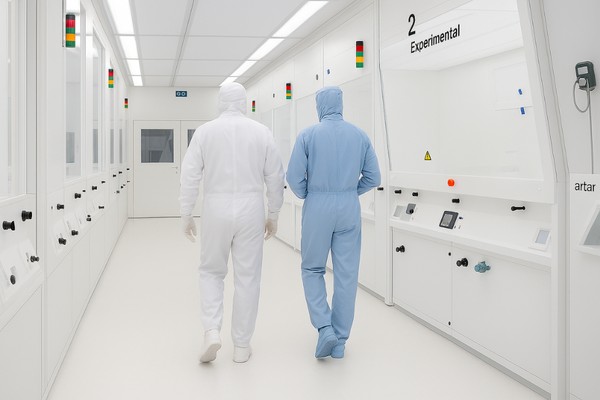
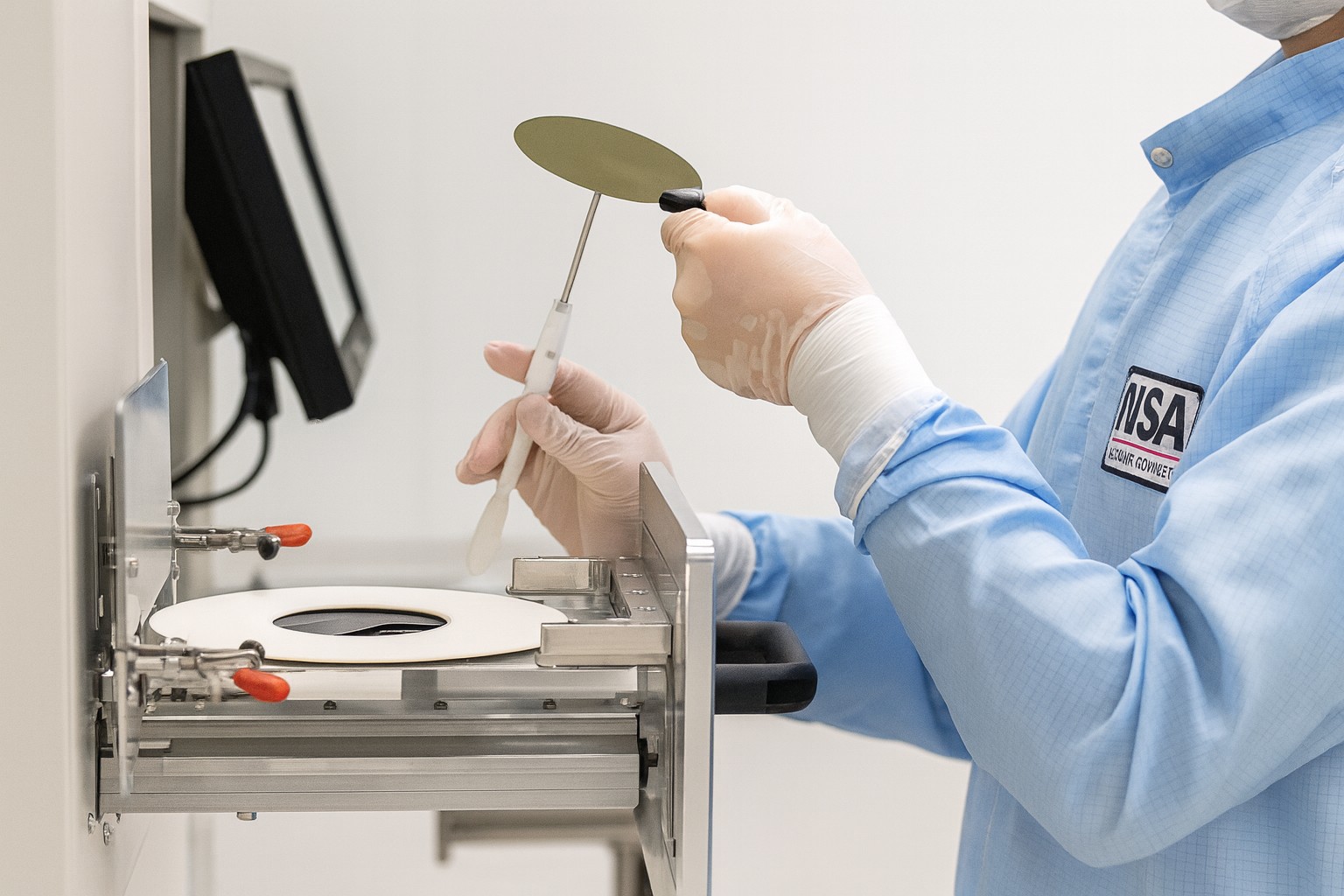
LioniX is a global leader in photonic chips. CEO Arne Leinse explains “In addition to designing and manufacturing chips, we also develop the corresponding modules. Chip production is our core business. For higher production volumes, we work with external partners. As a vertically integrated company, we oversee the entire process, so we can guide the customer from concept to finished product.”
A bridge between university and industry
LioniX and NLR have been collaborating in the field of integrated photonics for several years. “As a research organization, we support the aerospace sector, SMEs and Dutch startups in product development,” says Jaco Verpoorte, Principal R&D Engineer at NLR. “We take innovations developed at the university level to a higher Technology Readiness Level (TRL), so they can be deployed in aircraft and satellites, for example. That’s how we first connected with LioniX – initially through the University of Twente, and later directly. Their technology was unique and innovative, offering new possibilities for future antenna systems.”
“This collaborative approach truly reflects the strength of the region: companies, universities, and knowledge institutions are closely connected and actively support each other.”
Lockheed Martin as an international launchpad
In late 2024, LioniX and NLR announced their collaboration with US company Lockheed Martin. Together, they are developing a new antenna system for aerospace applications. For Leinse, this collaboration is strategically significant: “These are, of course, highly respected customers,” he says. “Serving a company like Lockheed opens many more doors and puts us firmly on the international map.”
Although LioniX collaborates with several major players, this is the first time such a partnership has been made public. A major advantage is that the entire supply chain is located within the Netherlands – largely in Twente. From chip design to assembly and testing, everything is close by. “That’s a big plus for us and for international customers like Lockheed,” says Leinse.
Co-development as the engine of innovation
For Leinse and Verpoorte, co-development is essential in projects of this scale. “In an innovative environment, you can’t simply hand over a list of requirements and walk away,” Leinse explains. “Our engineers need to sit in the same room with NLR’s engineers to determine what is needed. That’s how you arrive at a successful product. Having everything located here makes the collaboration far more efficient, and that’s crucial for us.”
Verpoorte agrees: “We define the user requirements and carry out the measurements, while LioniX designs the chips to meet those requirements. We also work together to explore how to make the product even smaller and lighter. This collaborative approach truly reflects the strength of the region: companies, universities and knowledge institutions are closely connected and actively support each other.”
“The many tech companies surrounding the university together form a high-tech campus.”
Regional collaboration, global impact
Both partners agree: Twente offers an ideal environment for innovation and high-tech development. But is anything still missing? “Large end users,” says Leinse. “There are already companies in Twente that purchase our modules, but having more major players in Europe would bring clear advantages from a geopolitical standpoint.”
Verpoorte sees the same gap from NLR’s perspective: “For example, the Netherlands lacks a major antenna manufacturer that could integrate LioniX’s chips. As a result, we mainly look abroad for partners. On the other hand, this makes our collaboration with LioniX even more valuable: together, we are developing regional technology with global impact.”
Next Tech
Photonics will redefine aerospace communication: faster, smaller, and smarter. In Twente, where research and manufacturing meet within walking distance, collaboration between LioniX, NLR, and global partners shows how regional innovation can power the next generation of satellite and defense systems.
To showcase Twente’s innovative high‑tech ecosystem to international entrepreneurs, Oost NL and Twente Board jointly developed the booklet Accelerate Next Tech. This article is part of that collection, highlighting how collaboration and technology drive innovation in the Twente region.
Share article on:
Elke Agten
Arne Leinse, CEO LioniX International
None
Up to date blijven?
None